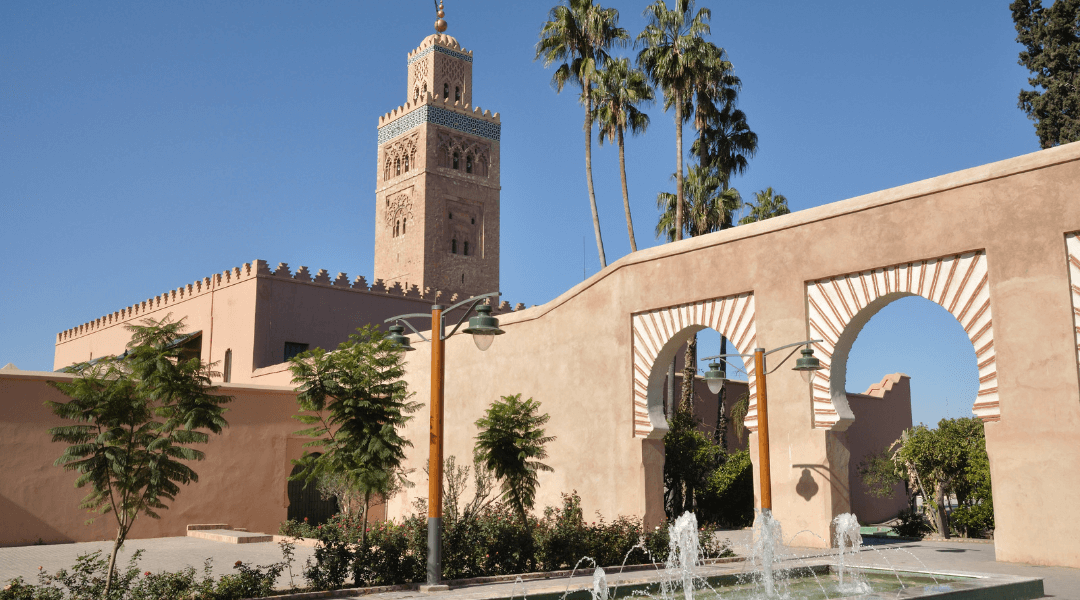
By Redouan Adib — Licensed Local Guide in Marrakech · 26 Years of Experience
There are travel guides written about Marrakech by journalists who spent a weekend here. There are guides written by bloggers who came for five days and left with a list of restaurants. And then there is this guide — written by someone who has lived and worked in Marrakech for his entire life, has led thousands of visitors through its streets, and knows this city the way most people know their own neighbourhood.
This is the complete Marrakech travel guide for 2026 — practical, honest, and built on 26 years of experience as a licensed local guide in Marrakech.
Why Visit Marrakech in 2026?
Marrakech has always been one of Africa’s most visited cities — but 2026 brings something extra. Morocco is riding significant momentum as a global travel destination following the 2030 FIFA World Cup co-hosting announcement, and Marrakech in particular is experiencing a wave of renewed international interest while maintaining the authenticity that has made it legendary for centuries.
New direct flight routes from North America and Europe have made the city more accessible than ever. Yet the Medina — the ancient walled city at Marrakech’s core — remains largely as it has been for a thousand years. That combination of easy access and genuine antiquity is rare in today’s world of travel.
As your local guide in Marrakech, I can tell you: there has never been a better moment to visit.
Best Time to Visit Marrakech
Spring (March — May) ⭐ Best Season
Spring is the finest time to visit Marrakech. Temperatures are warm but not brutal — typically 20–28°C — the almond and orange trees are in bloom, and the city feels alive without the crushing heat of summer. The Medina is at its most beautiful in April light.
Autumn (September — November) ⭐ Excellent
Autumn offers very similar conditions to spring, with temperatures gradually cooling from the summer heat. October is particularly wonderful — the light is golden, the crowds are slightly thinner, and the city has a relaxed, unhurried quality.
Winter (December — February) ✅ Good
Marrakech winters are mild by European and North American standards — daytime temperatures of 15–20°C — but evenings can be surprisingly cold. The Atlas Mountains visible from the city are often snow-capped, which creates a stunning visual contrast. December and January are relatively quiet, meaning shorter queues and more atmospheric streets.
Summer (June — August) ⚠️ Challenging
Marrakech summers are intense. Temperatures regularly reach 38–42°C, and the Medina — with its narrow streets and limited shade — can feel overwhelming in peak heat. If you visit in summer, plan all outdoor activities for early morning and late afternoon, rest during midday, and stay extremely well hydrated.
Ramadan — Plan With Awareness
Visiting during Ramadan is a genuinely extraordinary cultural experience — but it requires adjustment. Many restaurants are closed during daylight hours, the pace of life changes significantly, and the city transforms after sunset into something magical, with the Iftar breaking-of-fast creating a communal atmosphere unlike anything else in the world. As your local guide in Marrakech, I can turn a Ramadan visit into one of the most memorable of your life if it is approached with respect and the right guidance.
Getting Around Marrakech
Walking
The Medina is best explored entirely on foot. It is compact enough to walk across in 30 minutes, but rich enough to spend days exploring. Most of the streets are too narrow for vehicles anyway — which is part of what makes walking through it feel like genuine time travel.
Petit Taxis
Marrakech’s small orange petit taxis are the standard way to travel between the Medina and the modern Gueliz district. They are cheap, plentiful, and generally reliable — but always insist on the meter being switched on, or agree on a price before you get in. Standard fare from the Medina to Gueliz should be around 20–30 MAD.
Insider tip: Never get into a taxi that already has a passenger unless you are comfortable sharing. Shared taxis operate differently from private hire and can add significant time to your journey.
Calèches (Horse-Drawn Carriages)
Marrakech’s iconic calèches are not just tourist gimmicks — they are a legitimate and charming way to travel around the ramparts and through the Palmeraie. Agree on a price before you board (typically 150–200 MAD for an hour) and enjoy one of the most atmospheric rides in North Africa.
The Essential Neighbourhoods
The Medina — The Ancient Heart
Everything begins in the Medina. This UNESCO World Heritage Site is a labyrinth of mosques, palaces, souks, riads, and residential quarters that has existed in largely its current form since the 12th century. It is simultaneously the most visited and the least understood part of Marrakech — which is precisely why exploring it with a local guide in Marrakech makes such a difference.
The Mellah — The Old Jewish Quarter
Adjacent to the royal palace, the Mellah is one of the oldest Jewish quarters in Morocco, dating to the 16th century. Its distinctive architecture — wrought-iron balconies, tall narrow facades, covered streets — is unlike anywhere else in the Medina, and its history is one of the most fascinating and least-told stories in all of Marrakech.
Gueliz — The Modern French Quarter
Built during the French Protectorate period in the early 20th century, Gueliz is Marrakech’s modern city — wide boulevards, contemporary restaurants, art galleries, and the most comfortable cafés in town. It is where the city’s creative and professional class lives and works, and it offers a fascinating counterpoint to the ancient Medina just a 10-minute taxi ride away.
The Palmeraie — The Palm Grove
North of the city, the Palmeraie is an ancient palm grove stretching across several square kilometres that has historically served as Marrakech’s green lung. Today it is home to luxury villas, boutique hotels, and camel trekking routes — and it remains a genuinely beautiful escape from the intensity of the Medina.
Food & Eating Like a Local in Marrakech
Moroccan food is extraordinary — and Marrakech is the best place in the country to eat it. Here is what every visitor should try:
- Tagine — Morocco’s iconic slow-cooked stew, prepared in a conical clay pot. The lamb and prune version is the definitive Marrakchi recipe.
- Couscous — Traditionally eaten on Fridays after mosque, and the finest versions are found in home kitchens and neighbourhood restaurants, not tourist-facing establishments.
- Harira — A thick, spiced soup of tomatoes, lentils, chickpeas, and fresh herbs. The definitive comfort food of Morocco, particularly during Ramadan.
- Mechoui — Whole slow-roasted lamb, traditionally cooked in an underground pit. Sold by weight from specialist stalls in the Medina.
- Msemen with argan honey — Flaky Moroccan flatbread served warm with local honey. The finest breakfast in the world, in my honest opinion.
- Mint tea — Not a drink but a ritual. Moroccan mint tea is poured from a height to create froth, served sweet, and offered as an expression of hospitality. Never refuse a glass.
Where to eat: As your local guide in Marrakech, I will take you to the specific stalls and restaurants where locals eat — not the ones that appear at the top of TripAdvisor because they have invested in reviews management.
Hidden Gems — Places Only a Local Guide Knows
Every local guide in Marrakech worth their license has a list of places that never appear in guidebooks. Here are a few of mine:
- The Medersa Ben Youssef — A 14th-century Quranic school with the most breathtaking interior courtyard in all of Marrakech. Far more impressive than most of the famous palaces, yet far less crowded.
- The Saadian Tombs — A 16th-century royal necropolis sealed by a vengeful sultan for 200 years and only rediscovered in 1917. The craftsmanship is extraordinary and the atmosphere is genuinely otherworldly.
- The Secret Garden (Le Jardin Secret) — A recently restored 19th-century private garden hidden behind an unmarked door in the heart of the Medina. One of the most peaceful spots in all of Marrakech.
- The Chocolate Alley — A tiny unnamed passage in the spice souk where artisanal chocolate makers produce some of the finest Morocco-inspired confections I have ever tasted.
- The Thursday Berber Market at Ait Ourir — 35km from Marrakech, this weekly mountain market is where local Berber farmers and craftspeople trade. It is one of the most authentic markets in Morocco and almost no tourists know it exists.
Practical Tips for Visiting Marrakech in 2026
Dress Code
Marrakech is a conservative Muslim city, and respectful dress is both culturally appropriate and practically important. In the Medina, both men and women should avoid shorts and sleeveless tops. Lightweight linen trousers and loose-fitting shirts are ideal — they are also far more comfortable in the heat. Women will find that covering shoulders and knees significantly reduces unwanted attention from street vendors.
Bargaining in the Souks
Bargaining is expected and entirely normal in the souks. A general rule: the first price quoted is rarely the real price. Counter-offer at around 50–60% of the asking price and work from there. Never begin bargaining unless you are genuinely interested in buying — walking away after a long negotiation is considered rude.
The best protection against overpaying is having a local guide in Marrakech who will quietly signal to you what a fair price actually is.
Safety
Marrakech is a safe city for tourists. Violent crime is rare. The main concerns are petty theft in crowded areas (keep bags close and phones out of sight in Jemaa el-Fna at night) and the unofficial “guide” phenomenon — men who approach tourists offering to show them around, then lead them to shops where they receive a commission. Hiring a licensed local guide in Marrakech eliminates this problem entirely.
Currency & Tipping
Morocco’s currency is the Moroccan Dirham (MAD). It is not freely convertible outside the country, so exchange currency on arrival. ATMs are widely available in Gueliz and near the major Medina entrances. Tipping is expected and important: 10–15% in restaurants, 20–30 MAD for porters, and a meaningful tip for guides who have provided exceptional service.
Language
The main languages of Marrakech are Moroccan Arabic (Darija), Berber (Tamazight), and French. English is increasingly spoken in tourist-facing businesses and among younger Moroccans. Learning a few words of Arabic — shukran (thank you), la shukran (no thank you), bsaha (cheers/to your health) — will earn you genuine warmth and respect wherever you go.
How to Get the Most from Your Visit to Marrakech
After 26 years of guiding visitors through this city, I have one piece of advice that I give to every single person I meet: slow down.
Marrakech is not a city of landmarks to be ticked off a list. It is a city of atmosphere, texture, and human connection — and all of those things require time and attention. The visitors who leave Marrakech with the deepest memories are not the ones who saw the most sights. They are the ones who sat long enough in a small café to watch the neighbourhood come to life around them. Who accepted a glass of mint tea from a craftsman with no intention of buying anything. Who allowed themselves to get slightly lost in the Medina and discovered something that no guidebook had prepared them for.
That is the Marrakech I want to show you. And it is the Marrakech that will bring you back.
Plan Your Marrakech Experience with a Local Expert
Whether you are planning your first visit or returning to discover sides of the city you missed last time, I would love to be your local guide in Marrakech. Every tour I lead is completely private, fully personalised, and built around what you actually want to experience.
No groups. No fixed itineraries. No missed moments.
📩 Get in touch with Redouan Adib — your local guide in Marrakech for 2026